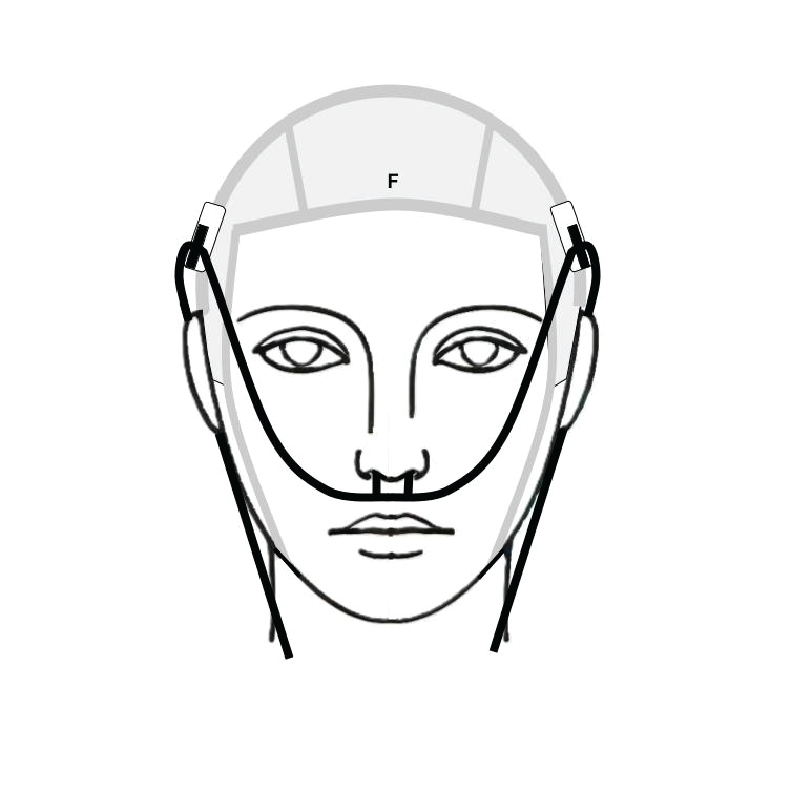
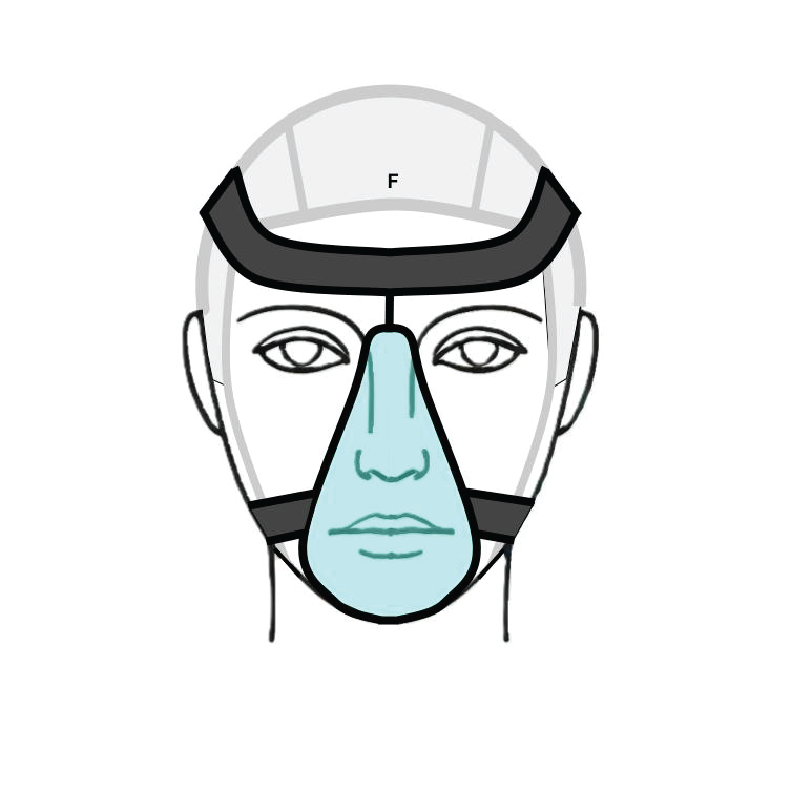
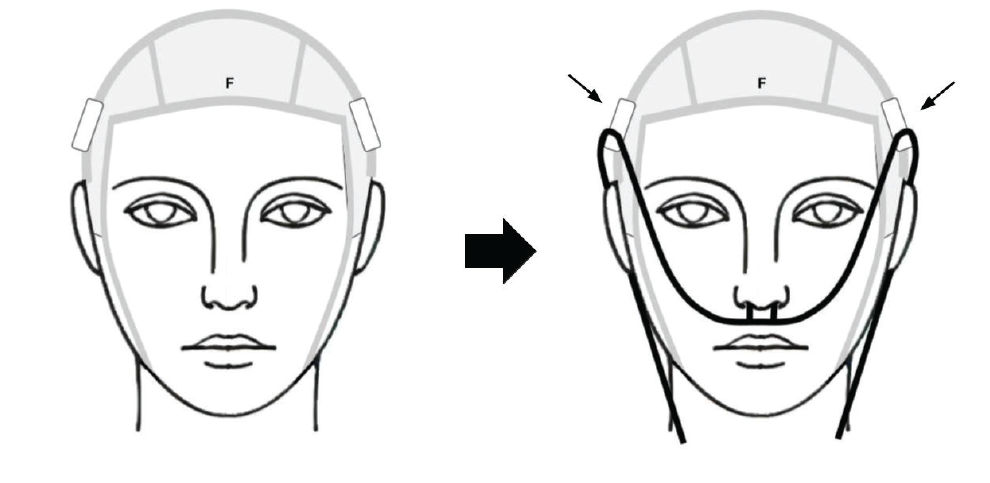
Larger ear holes, with velcro above the ears to secure tubing to the Cap From O2 devices such as: Nasal Cannula, High Flow, Oxygen Mask and BIPAP, and any other typ
2) Place cap on head with "F" in mid forehead
3) Lightly secure chin strap
For O2 Tubing - Ear Protection:
Place tubing on patient (as instructed by device), then bring tubing above ear and secure to Cap with Velcro
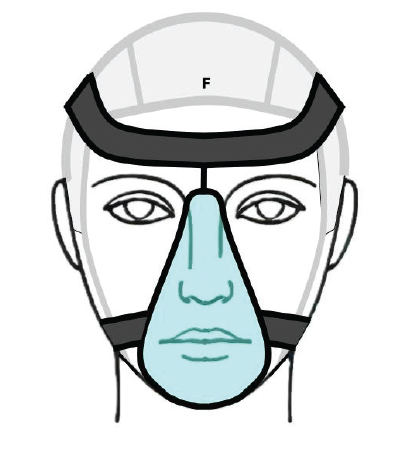
For BIPAP / CPAP Protection:
Place the Bipap straps over the Cap with a skin protective barrier under the Cap for high risk patients
O2 TUBING
HIGH FLOW
BIPAP / CPAP
HAPIShield - Description & Warnings
1. Description & Indications :
Single use patient care Cap that attaches to O2 devices (Nasal Cannula, BiPap masks... that attaches to the head or face) to assist with the prevention of HAPI (Hospital Acquired Pressure Injuries)
2. Contraindications:
HAPIShield Cap should only be used for securing hospital grade Oxygen supplies, i.e. Nasal Cannula, HFNC, Bipap Masks, and other oxygen delivery device with masks. HAPIShield strictly prohibits using the Cap for any other purpose than listed above. Storage of HAPIShield Cap should be between 50-80 degrees during storage and transport.
3. Warning & Precautions:
Single use only, cleaning of devices is strictly prohibited by IMD or HAPIShield.
If Velcro attachments become loose or breaks down change Cap.
Each patient may have different lengths of time to wear HAPIShield. Do not exceed 5 days use for any single patient.
Any external Chemicals, Gels, Dyes or Stringent hair products may damage the Cap.
Any unauthorized use of HAPIShield will void the Cap's warranty.
Please only use recommend size of HAPIShield for the patient.
HAPIShield will not be liable of any damages for any Oxygen Delivery device.
HAPIShield will not be liable if product is used past indicated storage life, shown on product.
Only expert clinical judgment should be used when sizing HAPIShield Cap.
4. Adverse Reactions: The following Adverse reactions may occur with
HAPIShield
Skin Abrasion from moving product harshly against skin.
Overtight or incorrect sizing of Cap.
Patients that are not alert or wake must be checked regularly to check sizing and skin integrity
Recommend a skin Visualization every 2 to 4 hours for skin breakdown.
If any manufacture defect does occur with HAPIShield during its use, please contact customer service. Regular clinical rounding must occur with HAPIShield Cap to check skin condition and integrity
2) Place cap on head with "F" in mid forehead
3) Lightly secure chin strap
For O2 Tubing - Ear Protection:
Place tubing on patient (as instructed by device), then bring tubing above ear and secure to Cap with Velcro
For BIPAP / CPAP Protection:
Place the Bipap straps over the Cap with a skin protective barrier under the Cap for high risk patients
HAPIShield -
Description & Warnings
1. Description & Indications :
Single use patient care Cap that attaches to O2 devices (Nasal Cannula, BiPap masks… that attaches to the head or face) to assist with the prevention of HAPI (Hospital Acquired Pressure Injuries)
2. Contraindications :
HAPIShield Cap should only be used for securing hospital grade Oxygen supplies, i.e. Nasal Cannula, HFNC, Bipap Masks, and other oxygen delivery device with masks. HAPIShield strictly prohibits using the Cap for any other purpose than listed above. Storage of HAPIShield Cap should be between 50-80 degrees during storage and transport.
3. Warning & Precuations:
Single use only, cleaning of devices is strictly prohibited by IMD or HAPIShield.
If Velcro attachments become loose or breaks down change Cap
Each patient may have different lengths of time to wear HAPIShield. Do not exceed 5 days use for any single patient.
Any external Chemicals, Gels, Dyes or Stringent hair products may damage the Cap.
Any unauthorized use of HAPIShield will void the Cap's warranty.
Please only use recommend size of HAPIShield for the patient.
HAPIShield will not be liable of any damages for any Oxygen Delivery device.
HAPIShield will not be liable if product is used past indicated storage life, shown on product
Only expert clinical judgment should be used when sizing HAPIShield Cap
4. Adverse Reactions:
The following Adverse reactions may occur with
HAPIShield
Skin Abrasion from moving product harshly against skin
Overtight or incorrect sizing of Cap
Patients that are not alert or wake must be checked regularly to check sizing and skin integrity.
Recommend a skin Visualization every 2 to 4 hours for skin breakdown
If any manufacture defect does occur with HAPIShield during its use, please contact customer service. Regular clinical rounding must occur with HAPIShield Cap to check skin condition and integrity
HAPIGUARD -
Instructions
2. HapiGuard – Patient Set up & Instructions
1) The Cap will have the following:
A designated “F” on f ront of the Cap
Chin strap with Velcro for size adjustments
2 larger ear holes with velcro above the ears to secure tubing to the cap from O2 devices such as: Nasal Cannula, Oxygen Mask, and any other type of oxygen delivery
2) Place cap on head with "F" in mid forehead
3) Lightly secure chin strap
4) Place tubing on patient (as instructed by device), then bring tubing above ear and secure to cap with Velcro
If any manufacture defect does occur with HapiGuard during its use, please contact customer service. Regular clinical rounding must occur with HapiGuard Cap to check skin condition and integrity.
HAPIGUARD -
Description & Warnings
1. Description & Indications :
Single use patient care cap that attaches to O2
devices (Nasal Cannula, BiPap masks… that attaches to the head or face) to assist
with the prevention of HAPI (Hospital Acquired Pressure Injuries)
2. Contraindications :
HapiGuard Cap should only be used for securing hospital
grade Oxygen supplies, i.e. Nasal Cannula, HFNC, Bipap Masks, and other oxygen
delivery device with masks. HapiGuard strictly prohibits using the Cap for any
other purpose than listed above. Storage of HapiGuard Cap should be between
50-80 degrees during storage and transport.
3. Warning & Precuations:
Single use only, cleaning of devices is strictly prohibited by IMD or HapiGuard.
If Velcro attachments become loose or breaks down change Cap.
Each patient may have different lengths of time to wear HapiGuard. Do not exceed 5 days use for any single patient
Any external Chemicals, Gels, Dyes or Stringent hair products may damage the Cap.
Any unauthorized use of HapiGuard will make Cap void the warranty.
Please only use recommend size of HapiGuard for the patient.
HapiGuard will not be liable of any damages for any Oxygen Delivery device.
HapiGuard will not be liable if product is used past indicated storage life, shown on product
Only expert clinical judgment should be used when sizing HapiGuard Cap
4. Adverse Reactions:
The following Adverse reactions may occur with HapiGuard
Skin Abrasion from moving product harshly against skin
Overtight or incorrect sizing of Cap
Patients that are not alert or wake must be checked regularly to check sizing and skin integrity
Instructions for Use
1. Description & Indications :
Single Use Patient Care Cap that O2 devices attach to assist with preventing device related hospital acquired injuries.To prevent Hospital Acquired Pressure device related Injuries f rom O2 delivery devices, i.e. Nasal Cannula, BiPap masks and other devices that attach to head or face.
2. Contraindications:
HapiGuard Cap should only be used for securing hospital grade Oxygen supplies, i.e. Nasal Cannula, HFNC, Bipap Masks, and other oxygen delivery device with masks. HapiGuard strictly prohibits using the Cap for any other purpose than listed above. Storage of HapiGuard Cap should be between 50-80 degrees during storage and transport.
3. Warning & Precuations:
Single use only, cleaning of devices is strictly prohibited by IMD or HapiGuard.
If Velcro attachments become loose or breaks down change Cap.
Each patient may have different lengths of time to wear HapiGuard. Do not exceed 5 days use for any single patient.
Any external Chemicals, Gels, Dyes or Stringent hair products may damage the Cap.
Any unauthorized use of HapiGuard will make Cap void the warranty.
Please only use recommend size of HapiGuard for the patient.
HapiGuard will not be liable for any damages for Any Oxygen Delivery device.
HapiGuard will not be liable if product is used past indicated storage life, shown on product
Only expert clinical judgment should be used when sizing HapiGuard Cap
4. Adverse Reactions:
The following Adverse reactions may occur with HapiGuard
Skin Abrasion from moving product harshly against skin
Overtight or incorrect sizing of Cap
Patients that are not alert or wake must be checked regularly to check sizing and skin integrity.
If any manufacture defect does occur with HapiGuard during its use, please contact customer service. Regular clinical rounding must occur with HAPiGuard Cap to check skin condition and integrity